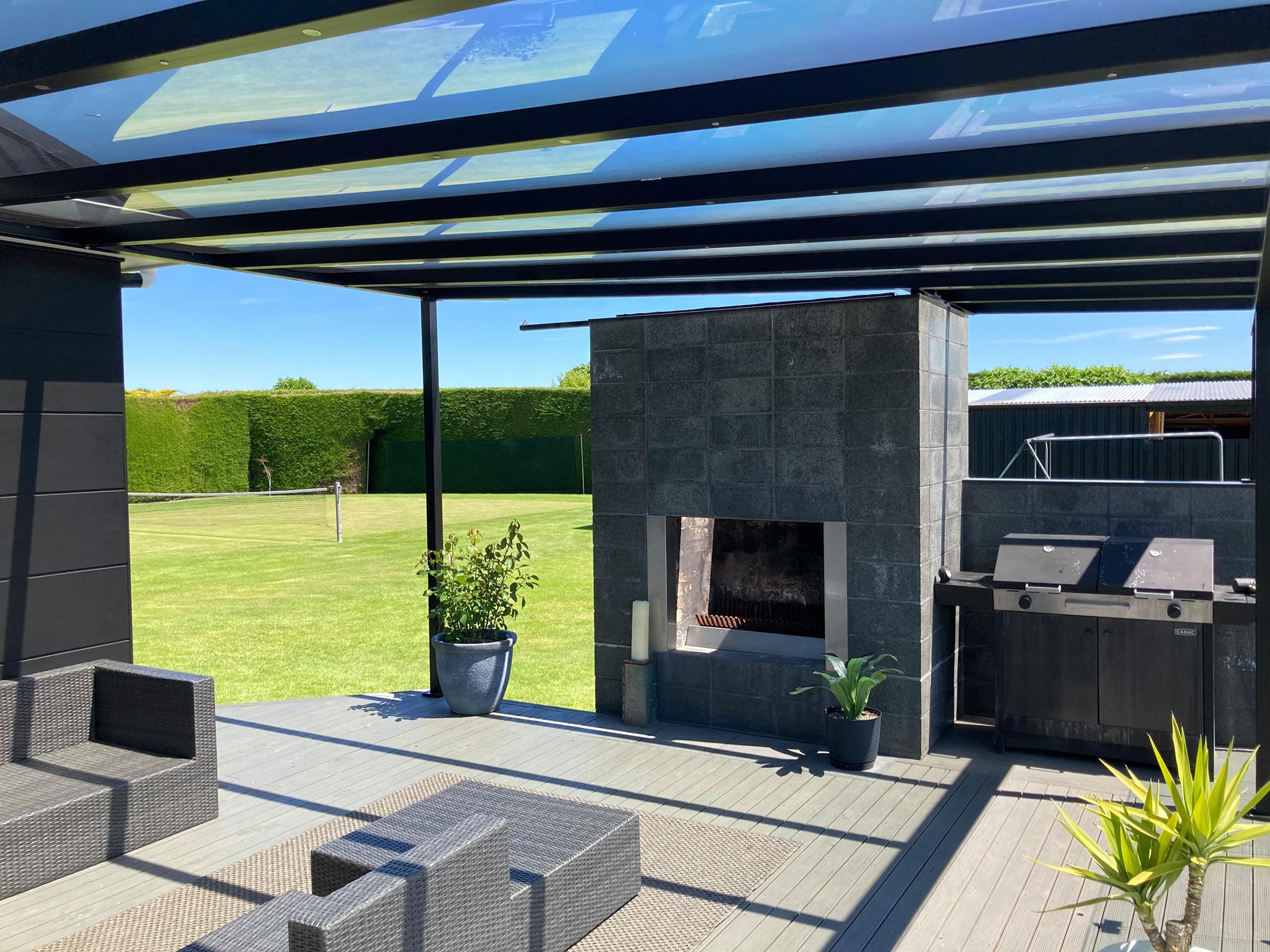
Good engineering shouldn't demand your attention. It should give you the confidence to forget about it.
You're sitting outside with friends.
Dinner is on the table. The conversation is flowing. The kids are moving between the house and garden, and someone has just opened another bottle.
Then the weather changes.
Rain begins tapping overhead. The breeze gets stronger. Somewhere beyond the shelter, the trees start moving.
And nobody does anything.
Nobody looks nervously upwards.
Nobody wonders whether the roof is strong enough.
Nobody thinks about fixings, spans, drainage, structural loads or how the shelter is attached to the house.
The conversation simply continues.
That absence of thought is important.
Because sometimes the clearest sign of good engineering is that nobody notices it at all.
Confidence Replaces Thought
We rely on engineering constantly.
We drive across bridges without considering the calculations beneath them.
We walk onto balconies without wondering what loads they're designed to carry.
We live beneath roofs without inspecting every beam before going to bed.
We can do those things because, somewhere behind the finished result, someone has already done the thinking for us.
The calculations have been made.
The materials have been considered.
The loads have been understood.
The details have been resolved.
And when all of that work is done properly, something quite remarkable happens.
Complexity disappears.
It's replaced by confidence.
Engineering Isn't the Experience
When you begin researching an outdoor shelter, it's easy to become overwhelmed by technical information.
Wind zones.
Beam spans.
Material thicknesses.
Fixing methods.
Engineering documentation.
Building standards.
Drainage requirements.
The list gets long surprisingly quickly.
These things matter enormously.
But they're not the reason anyone wants an outdoor room.
Nobody sits outside on a Sunday morning admiring the structural calculations.
They sit there because it's comfortable.
Because they feel protected.
Because the space works.
Because they don't have to think about why it works.
The engineering isn't the experience.
Confidence is.
Invisible Doesn't Mean Unimportant
There's an important distinction to make.
Good engineering disappearing into the background doesn't mean it should be hidden from scrutiny.
Quite the opposite.
The calculations, specifications, documentation and technical thinking should exist. They should be rigorous. And when they're needed, they should be available.
But the homeowner shouldn't need to carry that complexity with them every time they walk outside.
Good engineering does the worrying beforehand.
That's what allows everyone else to stop worrying afterwards.
More Isn't Always Better
It's tempting to think good engineering simply means making everything bigger.
Thicker beams.
More posts.
More fixings.
More material.
Sometimes more is necessary.
But good engineering isn't really about adding more.
It's about understanding what matters.
Where does the structure need strength?
How will loads move through it?
Where does water need to go?
Where will materials naturally expand or contract?
How should the shelter connect with the existing home?
Where can structure be removed without compromising performance?
Those questions require far more thought than simply making everything heavier.
The result of good engineering can often be surprisingly quiet.
When Engineering Creates Freedom
This is perhaps where engineering becomes most interesting.
Because its purpose isn't simply to hold something up.
It's to make better design possible.
A carefully considered span might remove a post from the middle of a view.
A cantilever might keep a pathway clear.
Thoughtful drainage can manage rainwater without disrupting the space below.
Understanding how materials move can allow details to remain clean and simple.
A structure can feel light and open precisely because a great deal of thinking has happened behind it.
In that sense, engineering isn't a restriction on design.
It's what gives good design freedom.
The Work You Never See
There's a strange paradox in well-designed products.
Often, the simpler something appears, the more work has gone into making it that way.
The finished structure might look effortless.
But behind that simplicity can sit years of refinement.
Calculations.
Testing.
Prototypes.
Failures.
Improvements.
Tiny changes most people would never notice.
All made so the person using the finished product doesn't need to think about any of them.
That's not accidental simplicity.
It's earned simplicity.
And perhaps that's one of the highest compliments engineering can receive.
A Thought From Flexiroof
At Flexiroof, we love engineering.
But we don't expect you to.
We believe the hours spent calculating, testing and refining should ultimately create something much simpler for the homeowner:
An outdoor room you don't have to think about.
A space where the structure quietly does its job in the background while life happens underneath it.
Because good engineering shouldn't become the centre of attention.
It should give you the confidence to forget it's there.
The Lighthouse Principle
The best engineering gives you confidence without demanding your attention.
Good engineering is rigorous behind the scenes and quiet in everyday life.
Its value isn't found in the calculations themselves.
It's found in everything those calculations allow you to stop thinking about.
Looking Ahead
If the best engineering often disappears into the finished design, there's an obvious problem.
How can you tell whether it's actually there?
When you're comparing outdoor shelters, specifications, warranties and claims can quickly become overwhelming.
Next week, we'll strip away some of that complexity and look at the things that really matter when deciding whether an outdoor shelter has been properly engineered.