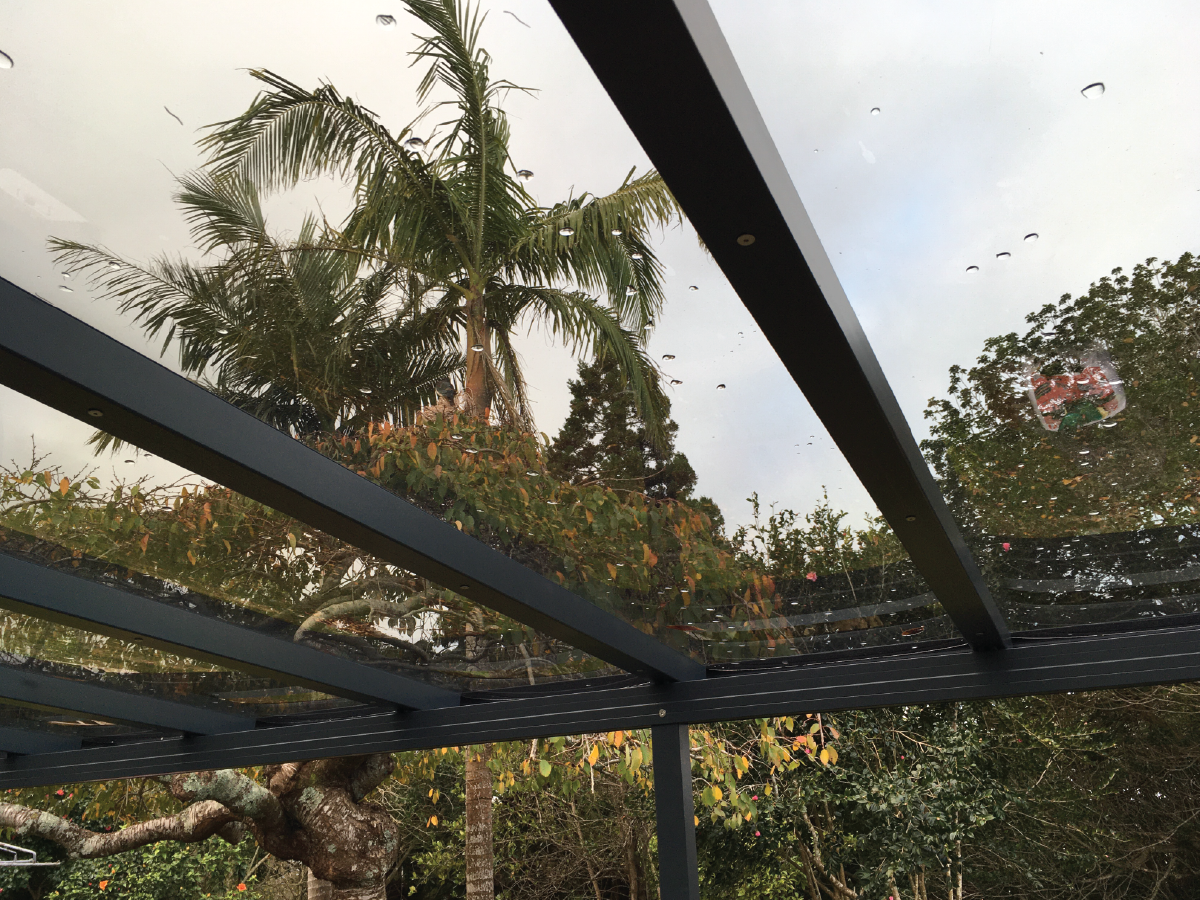
Great outdoor living isn't about escaping the weather. It's about no longer letting the weather make every decision.
New Zealand's weather has never been particularly interested in sticking to the forecast.
There's a reason Four Seasons in One Day feels less like a song title and more like a description of life on these islands.
A clear morning becomes a hot afternoon. A breeze arrives from nowhere. Clouds gather, a passing shower rolls through, and an hour later the sun is back as though nothing happened.
It's part of living here.
And, truthfully, it's part of what makes New Zealand such a remarkable place to live.
We have a climate that encourages us outdoors, surrounded by landscapes that constantly remind us why we want to be there.
Perhaps the problem isn't our changeable weather.
Perhaps it's that we've designed too many outdoor spaces that depend on it behaving itself.
Waiting for the Perfect Day
Think about how often we make plans around the weather.
"If it's fine, we'll eat outside."
"If the wind stays down, we'll have everyone over."
"We might use the deck this weekend if the forecast is good."
There's nothing particularly unusual about any of those statements.
But there is something interesting hidden within them.
We've allowed the weather to become the decision-maker.
The deck might be beautiful. The furniture might be comfortable. The garden might be exactly how we imagined it.
But if using the space requires the right combination of temperature, sunshine, wind and rainfall, then its usefulness is always conditional.
And perfect conditions are surprisingly difficult to schedule.
Weather Independence
Maybe there's another way to think about it.
Not weather resistance.
Not weatherproofing.
And certainly not trying to shut nature out.
Weather independence.
Weather independence is simply the idea that changing conditions shouldn't automatically decide whether an outdoor space gets used.
The weather can still influence the experience.
In fact, it should.
Feeling the warmth of the sun, hearing rain overhead, enjoying a gentle breeze and noticing the seasons change are some of the very reasons we enjoy being outside.
The goal isn't to remove those things.
It's to remove their veto.
A passing shower shouldn't necessarily end lunch.
Strong afternoon sun shouldn't automatically empty the deck.
A cooler evening shouldn't always send everyone indoors.
The weather remains part of the experience.
It simply stops controlling it.
Good Weather Is an Easy Design Brief
Almost every outdoor space works on a still, warm afternoon.
The sun is comfortable.
There's no wind.
No rain.
The temperature is just right.
You could put a table and chairs almost anywhere and have a wonderful time.
But perfect weather doesn't tell you much about the quality of an outdoor space.
The real test comes when conditions aren't perfect.
When the sun gets stronger than expected.
When a shower arrives halfway through dinner.
When the evening cools faster than the forecast suggested.
That's when thoughtful outdoor design begins to reveal itself.
Not because the space defeats the weather.
Because it continues to work alongside it.
Designing for Reality
Good outdoor design begins with understanding the conditions that actually exist around a home.
Every property is different.
One outdoor area might capture beautiful morning sun but become uncomfortable late in the afternoon.
Another might be wonderfully sheltered for most of the year but exposed to a prevailing wind.
A neighbouring building might provide winter protection while casting unwanted shade.
The orientation of the house, surrounding trees, topography and even nearby structures can all change the way weather behaves within a relatively small area.
That's why designing an outdoor room shouldn't begin with an assumption about what the weather will do.
It should begin by paying attention to what it already does.
Where does the sun travel?
Where does the wind usually come from?
Where does rain enter the space?
Which parts of the day are already comfortable?
Which conditions currently send everyone back inside?
These aren't obstacles to design around.
They're information.
Working With Nature
There's an important distinction here.
Great outdoor living isn't about creating an indoor room outside.
If that were the goal, four walls and another extension to the house would probably do a better job.
Outdoor rooms should still feel outdoor.
They should retain the light, openness, fresh air and connection to the surrounding environment that make them enjoyable in the first place.
That's why good design is often a balancing act.
Enough protection to create comfort.
Enough openness to maintain connection.
Enough control to make the space dependable.
But enough exposure that you still know you're outside.
Get that balance right and something changes.
You stop checking the forecast quite so often.
More Days Outside
Perhaps that's ultimately the best measure of weather-conscious design.
Not whether a space can withstand a storm.
Not whether it can completely eliminate wind, rain or sunshine.
But simply:
Does this design give us more opportunities to be outside?
Another breakfast.
Another family dinner.
Another hour reading while rain passes overhead.
Another evening with friends that doesn't end because the temperature drops slightly.
Individually, those moments seem small.
Over ten or twenty years in a home, they become thousands of hours of additional living.
And that's where the real value of weather independence begins to reveal itself.
A Thought From Flexiroof
At Flexiroof, we believe New Zealand's weather isn't something outdoor living needs to overcome.
It's something good outdoor design should understand.
Because the goal isn't to disconnect ourselves from the outdoors.
It's quite the opposite.
It's to create spaces that allow us to enjoy more of it, more often, without needing perfect conditions first.
Weather should influence the experience.
It shouldn't decide whether the experience happens.
The Lighthouse Principle
The best outdoor spaces don't depend on perfect weather to be enjoyed.
Great outdoor design doesn't shut nature out. It creates enough comfort and protection that changing conditions become part of the experience rather than the reason it ends.
Looking Ahead
Rain is usually the first thing we think about when considering weather protection.
But it's only one part of the picture.
Sun angle, heat, wind, orientation and seasonal change can have just as much influence on whether an outdoor space feels comfortable.
Next week, we'll look beyond simply keeping the rain out and explore what the weather can teach us about designing a better outdoor room.